About
Our Company
Established in the 1990s, we are a rapidly expanding company which has gained recognition for producing quality Construction Fiber Mix and catering to many prestigious companies. Our reputation has been achieved through our commitment to providing the highest possible service for all our customers. You can be assured of our friendly, Professional help coupled with an extensive product range to choose from. Siddha Chemicals offers a wide range of high Strength synthetic fibers which are rapidly available and easy to use. Depending on the requirement, one can choose among the various types of fibers available.
Siddha Chemicals regards our customer's needs as paramount and aims to offer the best in product, price and delivery. With the needs and requirements of each customer in mind, we continually review and seek to improve our service - from initial brief through to production using state of the art manufacturing processes and prompt delivery.
About
Our Dedication to Quality
Our Quality and Performance: The use of straw to reinforce bricks dates back to Egyptian time when horse hair was commonly used to reinforce lime / sand plaster until 1950s, and asbestos, until recently was used for around 100 years as a cement reinforcement for sheets or fiber-proofing products.
About polypropylene
Is Polypropylene 21st Century Straw?
Polypropylene is a relatively modern product with a large molecule built up by a repetition of small, simple chemical units until a polymer chain is formed. Polypropylene fibers as a secondary reinforcement, nowadays, are being used extensively throughout the world in all types of constructional concrete. Firstly, they have been proven as an effective method of controlling troublesome shrinkage in concrete. Then, after curing, the presence of fibers increases, the concrete long - term durability and toughness. Our monofilament fibers, which are produced from 100% virgin mono-polymer polypropylene, comply with the requirements of ASTM - C1116 and are developed as a crack - controlling additive for cementations materials. It is available as monofilament 20mm in length for concrete reinforcement and 6mm and 12mm in length for plaster and mortar. PP fibers are true monofilaments that totally disperse into the concrete mixing when added at the batch plant or at the job site.
About
Technical Properties
| Appearance | : | Natural White |
| Specific Gravity | : | 0.91 gr/cm3 |
| Diameter (din 53816) | : | 40 microns and higher (based on fiber usage and client request) |
| Tensile Strength | : | 350 MPA |
| Melting Range | : | 160 c0 - a65 c0 |
| OPU | : | 0.5% (Method, Henkel) |
| Crimp Waves /cm | : | 0 crimps/cm |
| Thermal Conductivity | : | Low |
| Electrical Conductivity | : | Low |
| Salt, Acids and Alkaline Resistance | : | High |
About
Concrete Permeability Tests
| Cement | : | 6 Kg |
| Sand | : | 20 kg |
| Course Aggregate | : | 15.2 Kg |
| Medium Aggregate | : | 3.2 Kg |
| Water | : | 3 Kg |
| Super Plastericisers | : | 30 gr (ASTM C-494 Type F) |
| Fibers | : | A) 0g pp Fibers 20mm B) 18gr pp Fibers 20mm |
About
Test Result
| ASTM SLUMP | : | A) Time 0':20 cm, 45': 16 cm B) Time 0':19 cm, 45': 14cm |
About
Compressive Strength 15 x 15 x 15 cm Cubes
| A) 3 Days: 24.8 MPA, 7d: 30.2 MPA, 28d: 36.4 MPA |
| B) 3 Days: 25.3 MPA, 7d: 32.1 MPA, 28d: 40.2 MPA |
About
Flexural Strength
| A) 28 Days: 4 MPA |
| B) 28 Days: 4.8 MPA |
About
Rocket Polypropylene Fibers Play Vital Role in Plastering
- Plastering is a process of applying one or more coats of mortar to a concrete surface, brickwork, stone masonry. It must be durable such that it resists the penetration of moisture and should be able to weather uniformly. It should be also pleasing in appearance.
- These properties depend upon materials used, composition of mix, degree of mechanical bond between the plaster and the backing surface and workmanship.
- Lack of bond with the backing more so when chicken mesh is used, cracking, crazing of surface and discoloration are principal defects in plastering
- Roman Coliseum was built with fiber reinforced structure in 80 AD, they used horse-hair as fibers.
- Tipu Sultan’s palace at Srirangpattnam has been built with Sheep's wool
- A Pueblo house built in 1540 with straw reinforcement adobe brick is believed to be the oldest house in USA
- Use of horsehair in plaster
- Have you not seen mud wall in villages with straw reinforcement?
- Fibers provides 3 dimensional secondary reinforcement
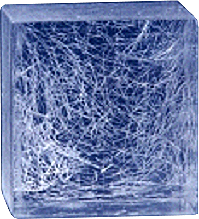
Dispersion of Fibers in Mortar
Fibers physical presence and mechanical strength prevents formation of micro cracks throughout the matrix.
About
Advantages of Rocket Polypropylene Fibers
- Reduces rebound loss by 50-70%
- Checks dampness, saves on repairing cost
- Improves shatter resistance in walls
- Checks crack propagation while cutting grooves for conduit laying
1 kg of Rocket Fibers contains 14 crores of fibers.
One pouch of 90 gms contains 1.25 to 1.5 crores of fibers.
One sq. ft of plaster contains almost 5 to 15 lakhs of fibers which forms a mesh and gives 3 dimensional secondary reinforcement.
Rocket Polypropylene fibers are very stable in alkaline medium. As our cement is an alkaline medium the Rocket polypropylene fibers are very stable in this medium. They are hydrophobic and get dispersed in water very easily. Hence they get mixed with the mortar homogeneously.
About
Dosage
Plaster: Use 6mm/12mm @ 90gms / cement bag in 1:4 cement / sand ratio
Concrete: Use 20mm@ 600gms /cubic meter
Mortar: Use 800gms/cu.mtr.
The above mentioned dosage is just a guideline. It is recommended to optimize the dosage depending the requirement.
About
Savings
- Rebound loss reduced by 50 to 60%
- Less time required for Finishing of Plaster so saving in labour time.
- Protects Chipping of edges and controls cracks.
- No dry cement required for finishing the plaster, hence overall saving of 10% in cement required for overall project plaster. So the cost of fibers is nullified.
We enclose the photocopies of Purchase orders of our esteemed Clients.
We hope that the above information regarding our product, will suffice your technical needs. If you need any further clarification please call on us.
CantactOur
Esteemed Customers
- 01
- Shree Bal Constructions P. Ltd.
- 02
- B. U. Bhandari Constructions
- 03
- M & T Constructions
- 04
- Vishwa & Lunkad Associates
- 05
- Gera Developers P. ltd.
- 06
- Nyati Constructions
- 07
- Spaciana Developers
- 08
- Aum Housing
- 09
- Shah Constructions
- 10
- Prasun Developers
- 11
- Mittal Constructions
- 12
- Muttha Associates- Jain Constructions
- 13
- Aditi Group
- 14
- Bhujbal Constructions
- 15
- Om Developers
- 16
- Panchshil
- 17
- R. D. Deshpanday
- 18
- Sun Developers
- 19
- Aaradhay Developers
- 20
- Span SM Construction Co.
- 21
- Tulsi Developers
- 22
- AB’s Palace
- 23
- Gandhi Bafna Associates
- 24
- Parakh Associates (Lonavala)
- 25
- Swatantraya Veer Savarkar Mandal
- 26
- Sundew Estates
- 27
- J. S. Enterprises
- 28
- Rameshwar Developers
- 29
- Shiv Shakti Constructions
- 30
- Bramha Builders
Our
Projects
- 01
- Shapoorji Paloonji Co. Ltd.
- 02
- Dr. D. Y. Patil Pratishthan
- 03
- NCCCL
- 04
- Mahendra Gesco
- 05
- Wipro Ltd.
About
Polypropylene Fibers
Polypropylene fibers are hydrophobic non-corrosive and resistant to alkali, chemicals and chlorides. Due to these above characteristics, polypropylene fibers have no significant effect on water demand of the fresh concrete. Hence these fibers neither intervene the hydration of cement nor do they influence unfavorably on all the constituents of the concrete mixture.
Polypropylene is the lightest synthetic polymer, (sp. gr. is 0.91; when added to water the material floats) hence the count of fiber for a given weight is maximum. For example polyester is 52% heavier in comparison to polypropylene. Similarly nylon and acrylic are 26% heavier than polypropylene. These facts make polypropylene fibers ideal for reinforcement.
Rocket fibers are polypropylene fibers made from pure and virgin polypropylene, which is suitably treated for proper dispersion. The triangular cross-section of these fibers help in additional reinforcement. The stability of Rocket polypropylene fibers in alkaline condition makes it best suitable for the construction Industry.
For ages fibers have been used in construction industry. Houses, made of mud but reinforced by straw, have stood against natural calamities. Historical evidence prove the usage of hair of various animals in the construction of monuments and palaces.
Rocket offers a wide range of high strength synthetic fibers which are readily available and easy to use. Depending on the requirement, one can choose among the various types of fibers available.
About
Different Types of Fibers
RPP06
These are polypropylene fibers with 6mm cut length. They are mainly used in the final plaster coat. Necessary care has been taken to insure dispersion of these fibers during the hand mixing of mortar.
RPP12
These are polypropylene fibers with 12mm cut length. They are used in mortar mix where the thickness of the application of the mortar is 15mm or more. They are suitable for initial coat of plaster and water proofing of structure. They are also added in concrete mix for additional reinforcement.
RPP20
These are polypropylene fibers with 20mm cut length. They are used in concrete. The long length of fibers holds the different components of concrete together. Necessary care has been taken for proper dispersion of these fibers in the concrete mixing machines.
To have information regarding the polypropylene fibers, please click on the link
About
Use of Fibers
Fiber disperses in the cement (concrete / plaster) mix and forms a three dimensional network, when the mixture is caste. This results in additional reinforcement, thereby increasing the quality and durability of the construction.
About
Advantages
Concrete possesses high compressible strength but are very brittle and weak in tension. Additional reinforcement results in increase in strength. It is important to note that only fibers can provide increase in tensile and flexural strength to a designed mix. Unlike steel bars, Rocket fibers disperses in the concrete mass, which results in additional reinforcement. When used in plaster mortar, Rocket fibers provide a 3 - dimensional reinforcement, unlike chicken mesh which provides 2 - dimensional reinforcement.
Cracks are caused mainly because of plastic shrinkage or thermal stress due to fluctuation in ambient temperature. Use of Rocket fibers results in substantial reduction in crack formation. These fibers control formation of micro cracks by absorbing the stresses, which is left unchecked, resulting in larger cracks. This is achieved by dispersion of millions of Rocket fibers which form a high strength 3 - dimensional reinforcement network.
Water permeability decreases due to the reduction of micro cracks.
Rocket fibers hold together fine particles of sand, cement and stone chips. This increases the abrasion resistance when exposed to excessive wear from tyres, foot movement, etc.
Rocket fibers reduce rebound loss 'splattering' during plastering, shotcrete and guniting. This results in increased coverage in the first attempt, thereby it reduces the wastage of material and labour time.
Rocket fibers are environment friendly and non-hazardous. They disperse and separate easily in the mix.
Rocket fibers are safe and easy to use.
About
Direction for Use
- 01
- For use in concrete add the fibers directly to the mixer along with water and then add the batch.
- 02
- For plaster, add fibers in a bucket of water and mix vigorously. Spread the water along with fibers over the dry mixture of mortar.
For more details, please contact us
Cantact